ShockTalk

Culturally tailored telehealth for Indigenous communities

Role. End-to-end product design and engineering, with a focused craft pass on ShockTalk’s glass UI and visual system—information architecture, flows, content design, and production code. I partnered with co-founder Sutton King on company strategy and community relationships.

Product Owner & Engineer · 2019–present · Live in App Store
2022 pilot protocol: JMIR Research Protocols (PDF), November 2025

The fractured question

For an Indigenous person in New York City, finding mental health care often comes down to one question: how do I find an Indigenous therapist I can actually afford? Simple on the surface. But the answer fractures quickly.

If you’re federally recognized, the nearest IHS clinic might be four hours away. If your nation isn’t federally recognized, you’re not sure where to start. If you’re Indigenous to Central America, the Caribbean, or the Pacific Islands, you’re not sure there’s anything out there for you at all. And even if you find someone — how do you know they’re connected to community the way they say they are?

No dedicated platform existed to answer any of these questions. With IHS funded at less than half its required budget and only 1–2% reaching urban programs — despite more than 70% of Indigenous people living in urban areas — there was no institutional backstop either.

The system wasn’t built for them. ShockTalk was.
Learnings from community

Through NYU’s Startup Bootcamp, my co-founder Sutton King and I conducted an interview marathon with 70+ therapy seekers and clinicians across Indian Country. We expected stigma to be the primary barrier. It wasn’t.

The desire for care was strong and present. People weren’t reluctant to seek help — they couldn’t access it. Community members described waiting 8+ months to see a psychologist, or 12+ hours in line for a generic Prozac prescription.

The second insight reframed the entire product. Community wasn’t asking for an indigenized version of Western healthcare. They wanted access to their own healing traditions alongside clinical care. The shortage of Indigenous clinical providers was so severe it was functionally insurmountable through clinical means alone — but expanding capacity through traditional healers, peer support specialists, and elders wasn’t a workaround. It was what community had been asking for all along.

Expanding care delivery capacity through key cultural figures like elders is where ShockTalk’s guiding principle — Culture as Prevention and Treatment — meets its fullest expression. Indigenous cultural practices aren’t a complement to care. They are care.

From vision to evidence

We already had a strong read on the problem space. I led with high-fidelity mockups to make the vision tangible and bring partners and participants into the conversation — then ran structured customer discovery interviews to validate or invalidate specific product choices. Messenger-first shipping and the later native iOS push followed from what we learned; multi-channel architecture turned out to be essential when Meta changed the rules.

Validated by industry leading accelerators

The concept progressed through NYU’s Startup Bootcamp and the Blackstone Summer Launchpad in 2020, then MIT Solve’s Indigenous Communities Cohort that fall — where connections to senior IHS officials shaped our understanding of the provider landscape. The 2022 Messenger pilot ran in partnership with Columbia School of Social Work under IRB approval, with the protocol published in JMIR Research Protocols (November 2025). Additional recognition came through the CUNY Firefly PHIA Accelerator (1st place, both the Accelerator and Design Challenge) and the 2022 Headstream Accelerator. $70k raised across these programs and prizes on the strength of concept and design alone.

Checking provider safety and credibility

The same question that drives client matching also drives provider onboarding. Every provider goes through an initial conversation before joining the platform — not a credentials check, a community check. We ask the questions community would ask: Who are your people? Where do they come from? What’s your experience working in community? For providers we don’t already know through community ourselves, we check three references.

It’s a verification model rooted in Indigenous epistemology rather than institutional gatekeeping. Credentials matter, and we collect them — but they don’t substitute for the kind of relational accountability that community has always used to know who belongs.

Three decisions traceable directly to community

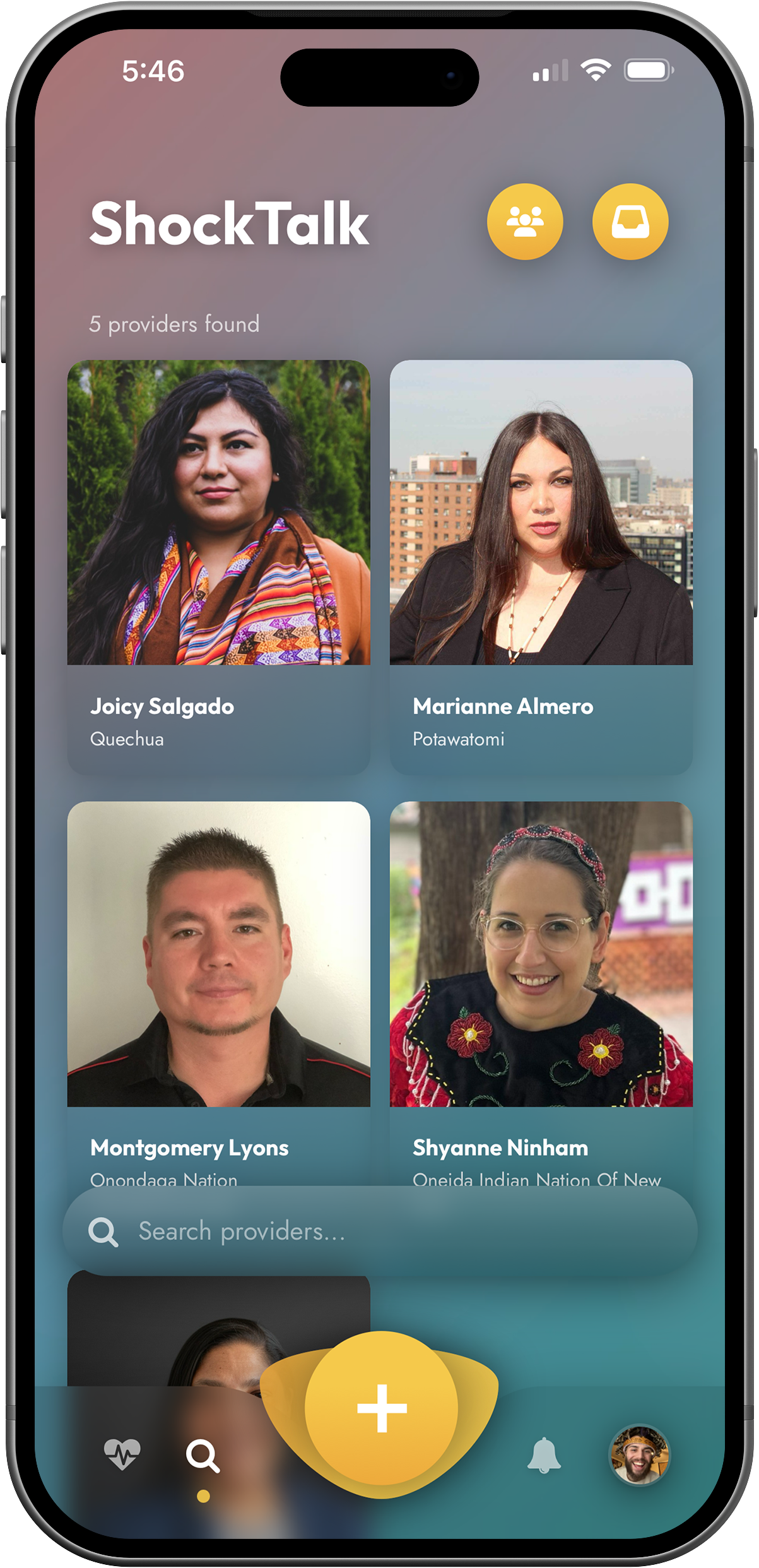
ShockTalk iOS search results listing providers with tribal nation shown under each name

Lead with tribal affiliation — provider grid on iOS.

Lead with tribal affiliation

Provider profiles surface tribal affiliation before credentials, biography, or specialty. It’s not a demographic field — it’s a multidimensional signal. In one or two words it tells a prospective client whether this provider is connected to their indigeneity, what their historical relationship to colonization might be based on their nation’s geography, and whether there’s potential cultural proximity between provider and client. A Northeastern Woodlands client seeing a provider from the same region knows something immediately that no amount of bio text could convey as efficiently.

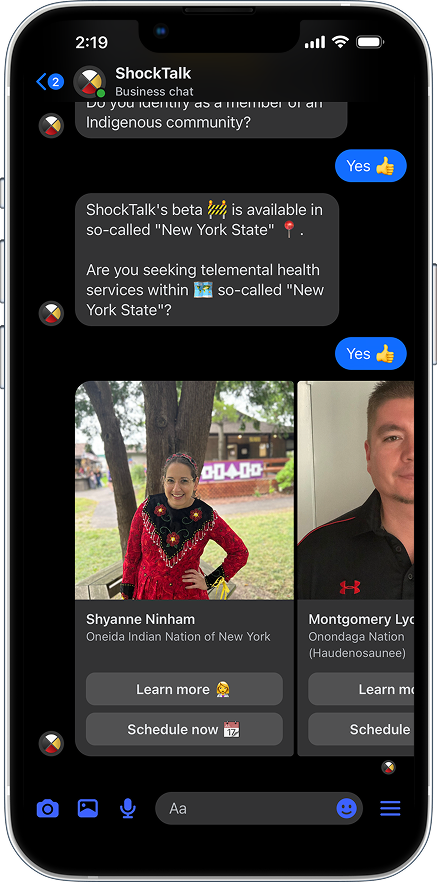
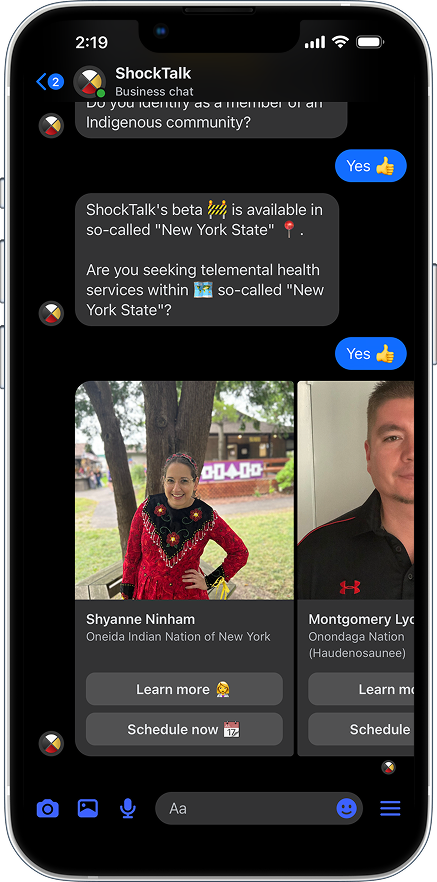
Facebook Messenger thread with ShockTalk onboarding copy referencing so-called New York State and provider cards

Community voice and provider cards in Messenger.

Written with community voice

Onboarding copy like “so-called ‘New York State’” wasn’t a political statement — it was a voice decision. Indigenous community members speak to each other a certain way in informal spaces. A chatbot that sounds like a clinical intake form with a land acknowledgment bolted on signals immediately that it wasn’t built by or for Indigenous people. Copy that reflects how community actually talks signals the opposite.

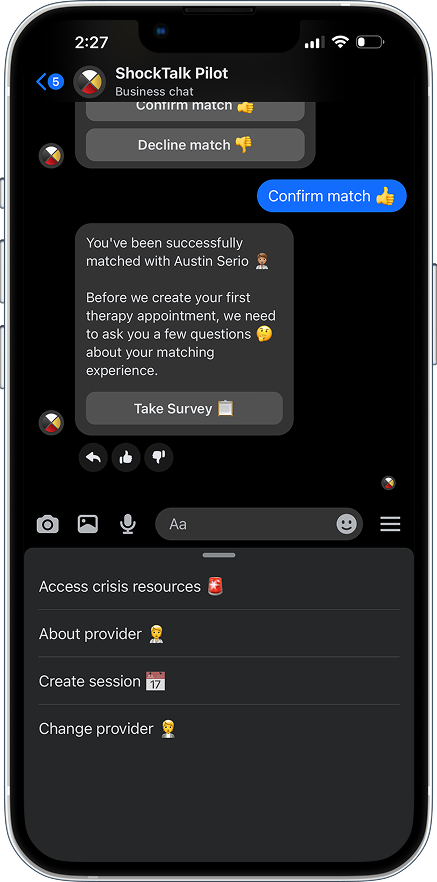
Messenger booking confirmation with persistent menu including Access crisis resources

Persistent menu with crisis resources.

Crisis resources one tap away, always

Crisis support resources are a persistent option regardless of where a user is in the flow. Two reasons: liability, and the basic UX reality that someone in a crisis state cannot navigate menu layers to find help. Designing for your user’s worst moment, not just their typical one, is the difference between a resource and a lifeline.

Six years, three channels, one thesis

Meeting people where they are sometimes means accepting platform dependency as a deliberate tradeoff. ShockTalk’s design has lived in three places — and that wasn’t a failure of vision, it was the strategy.

The product today

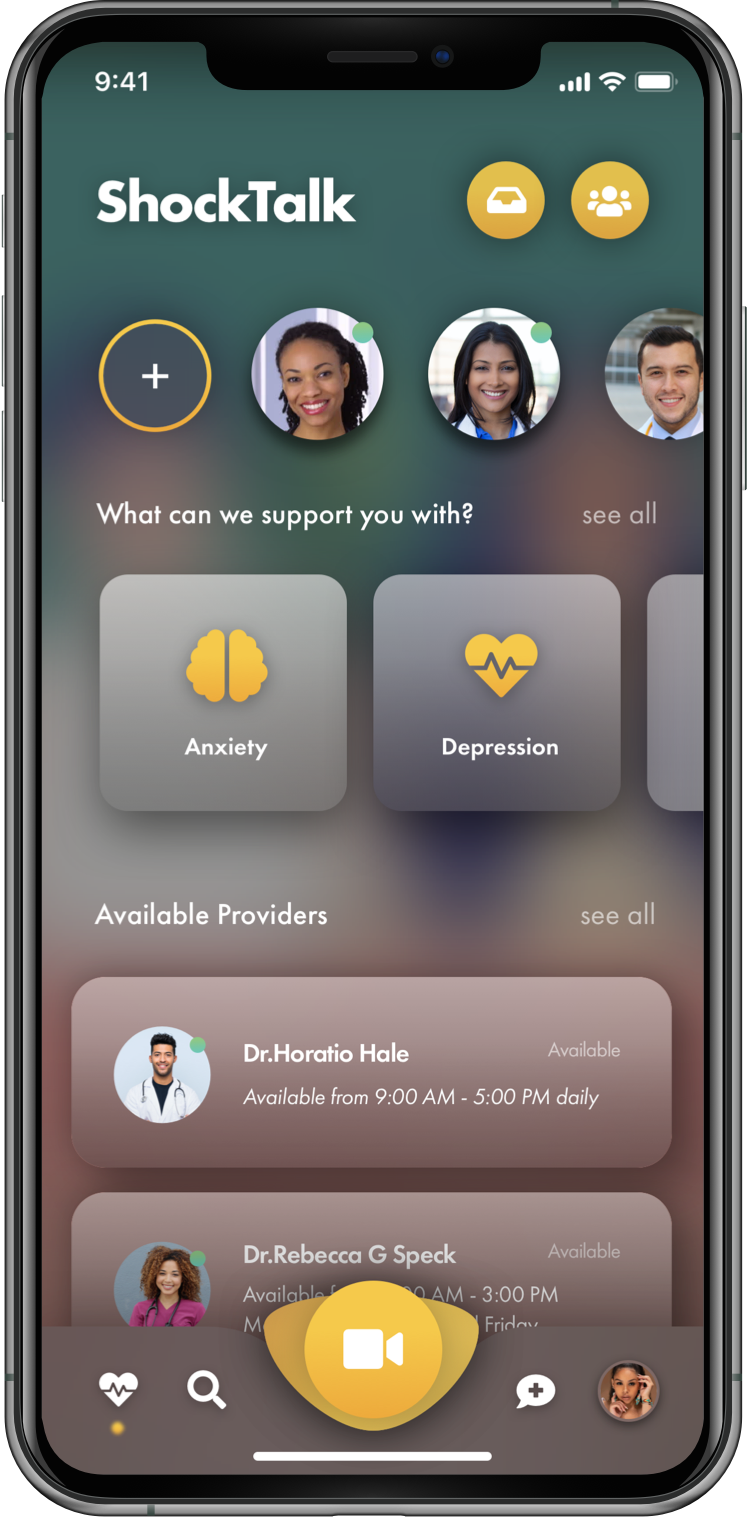
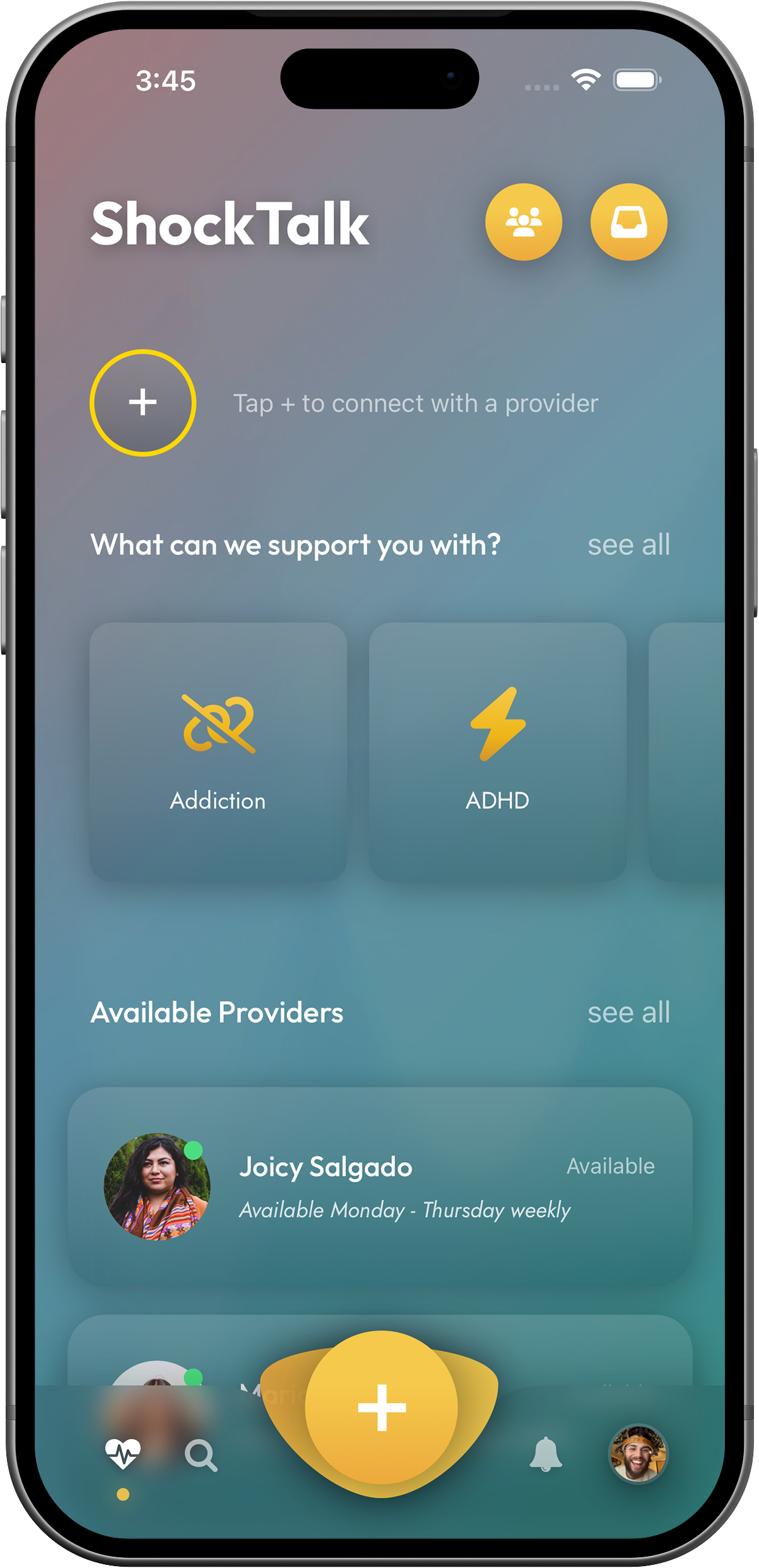
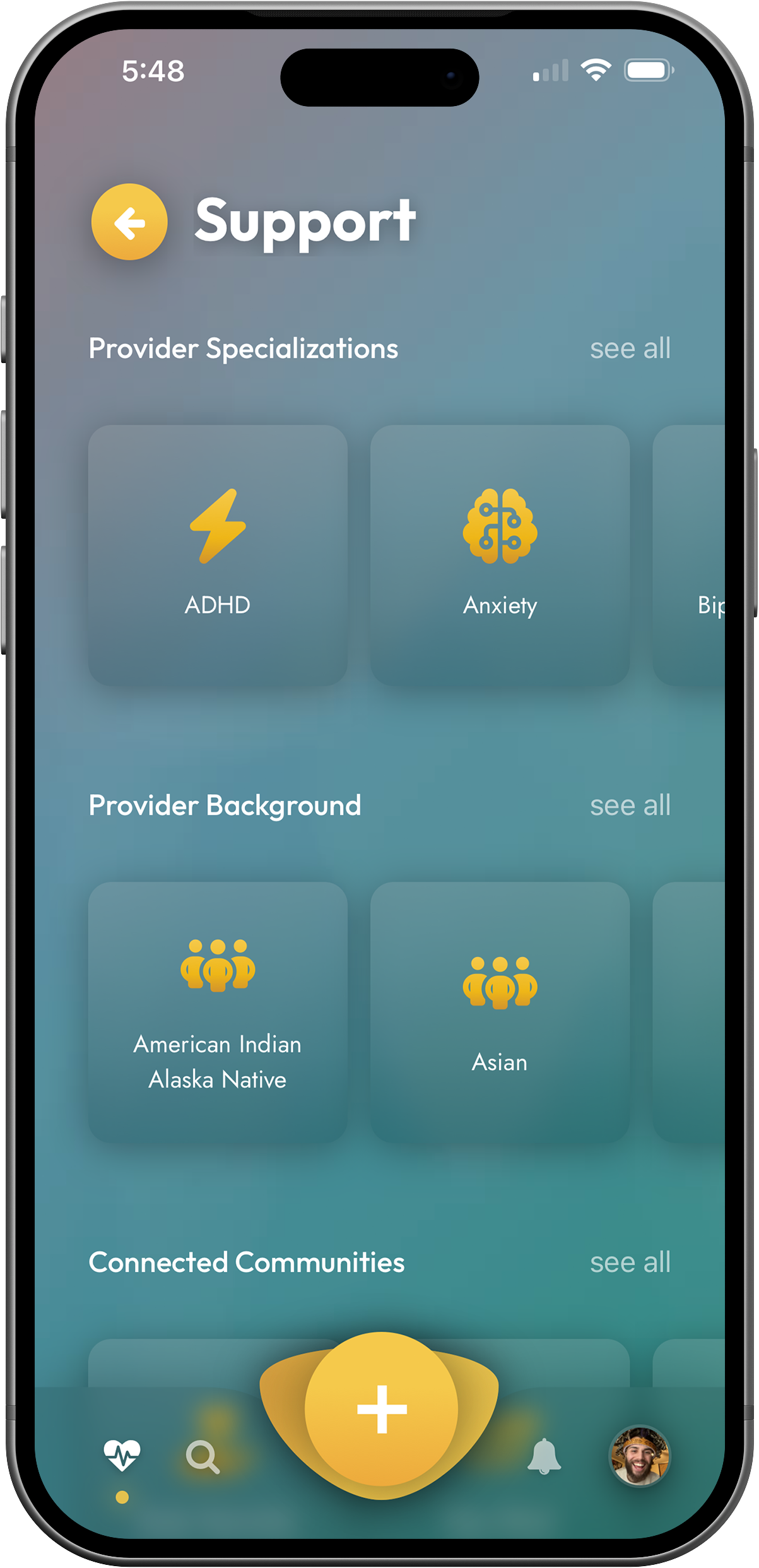
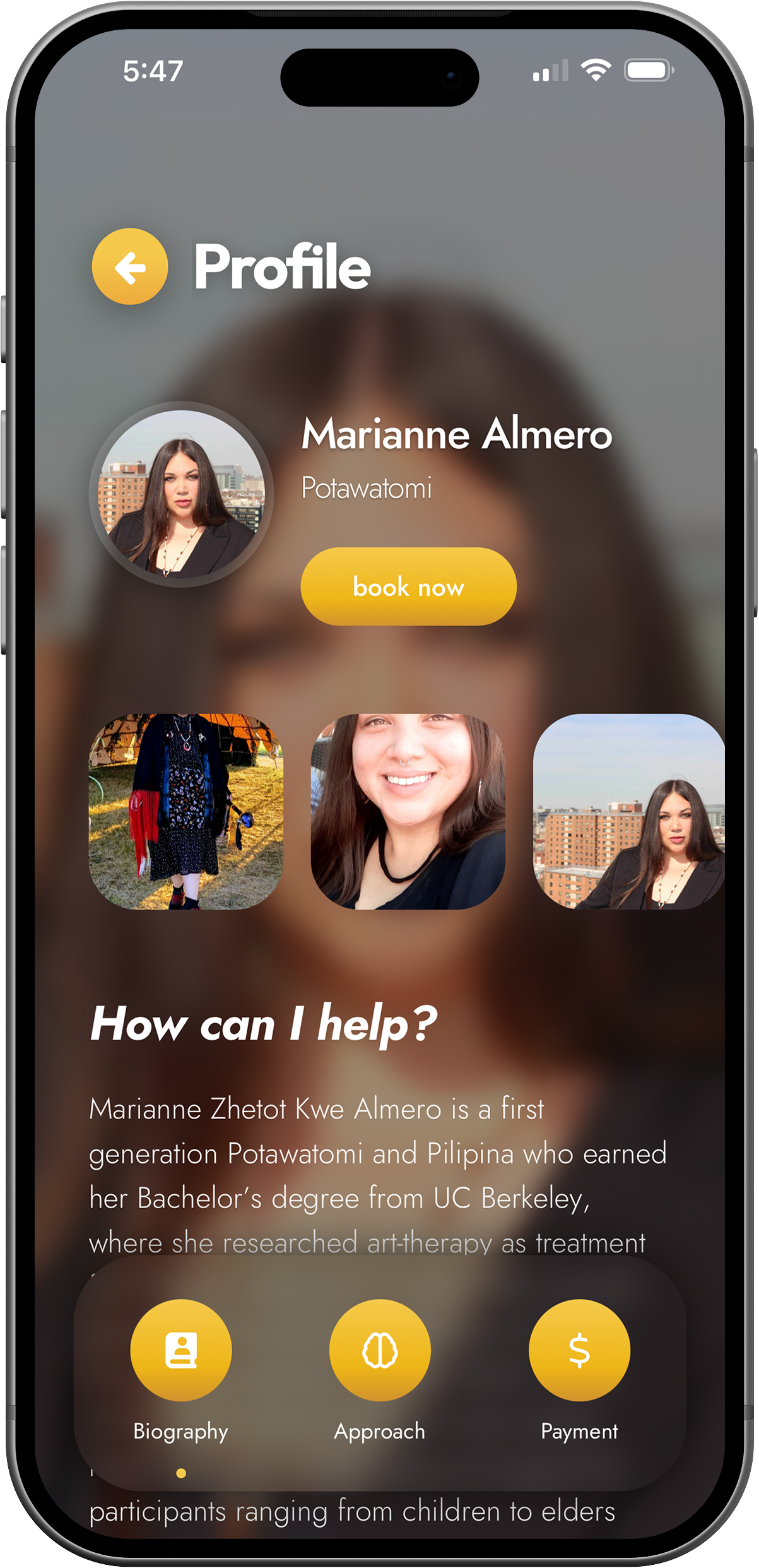
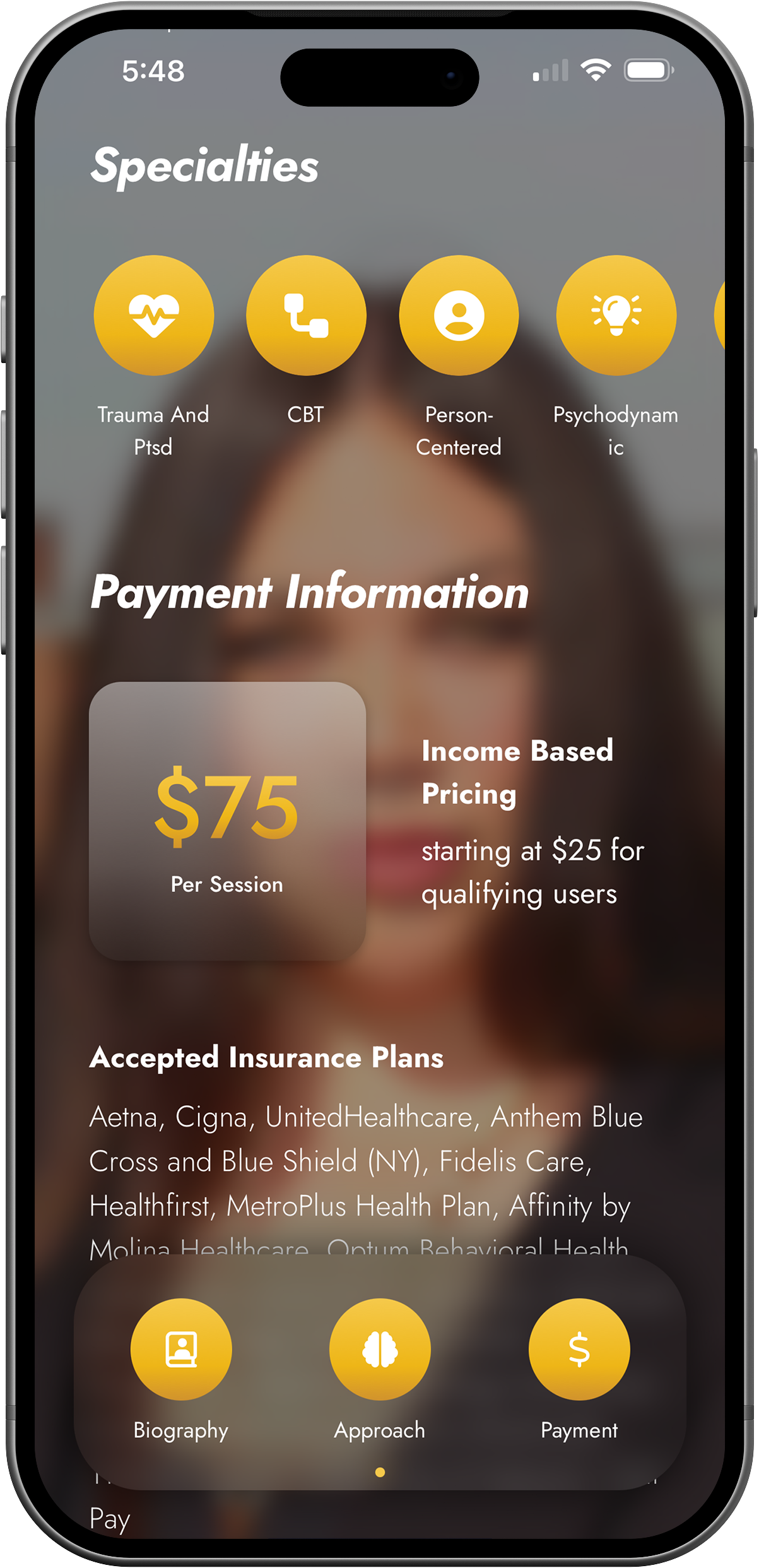
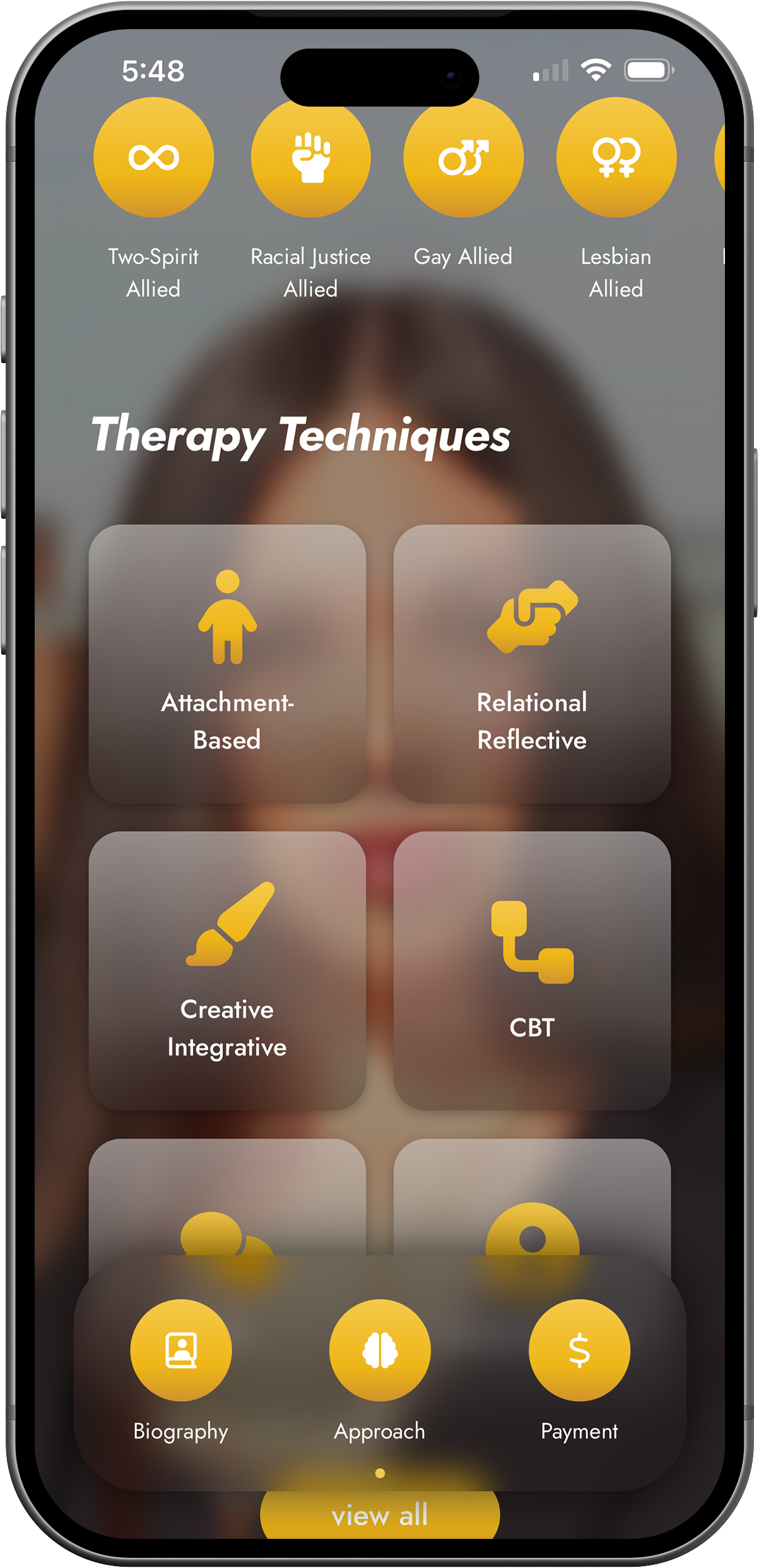
Current iOS build — discovery (home, search, support), then how a provider profile is structured end to end.

The provider profile sequence shows ShockTalk’s information hierarchy in practice. Name and nation come first. Then booking. Then biography, specialties, payment, therapy techniques, and identity affiliations — the kind of cultural and clinical fit information community asked for, in the order they look for it.

Outcomes

ShockTalk has moved deliberately. Coming from a community that has seen too many broken promises, we made a conscious decision to operate at small scale until we had something stable and long-lasting to offer. That caution proved warranted twice — first when V1’s costs proved unsustainable beyond the pilot, then when V2’s core functionality was unexpectedly terminated by Meta. Neither outcome would have been acceptable at scale.

What we have is deep validation across two shipped products on the same product thesis, and a third now in the App Store. The IRB-approved pilot engaged on the order of four providers and four participants; today the live product is roughly five providers and about ten users — small by venture metrics, but real production usage and learning under the constraints we chose.

$70k raised 70+ community interviews IRB-approved clinical pilot 1st place CUNY Firefly PHIA JMIR Research Protocols NYU Bootcamp Blackstone Launchpad MIT Solve Headstream

Built with

Full glass UI system and flows designed and implemented in-house.

React Native (Expo)
React Native Web (Expo)
Sketch
Azure
Postgres
Flask + Python

What’s next

With our foundation stabilized, the path forward is clear. HIPAA-compliant real-time messaging is rolling out imminently, followed by revenue service at $29.99/month — giving Indigenous community members access to the platform at a price point designed for the people we serve. This summer, in partnership with Urban Indigenous Collective and funded through Decolonizing Wealth Project’s Youth Mental Health Fund, we’re expanding care delivery capacity in New York by bringing non-clinical peer support specialists onto the platform — fulfilling what community told us they needed back in 2020. ShockShare, our community content layer, launches later this year. Geographic expansion, in-house scheduling, and the Android app follow.

What community asked for six years ago is finally being built — on infrastructure we own, at a price point designed for the people we serve.